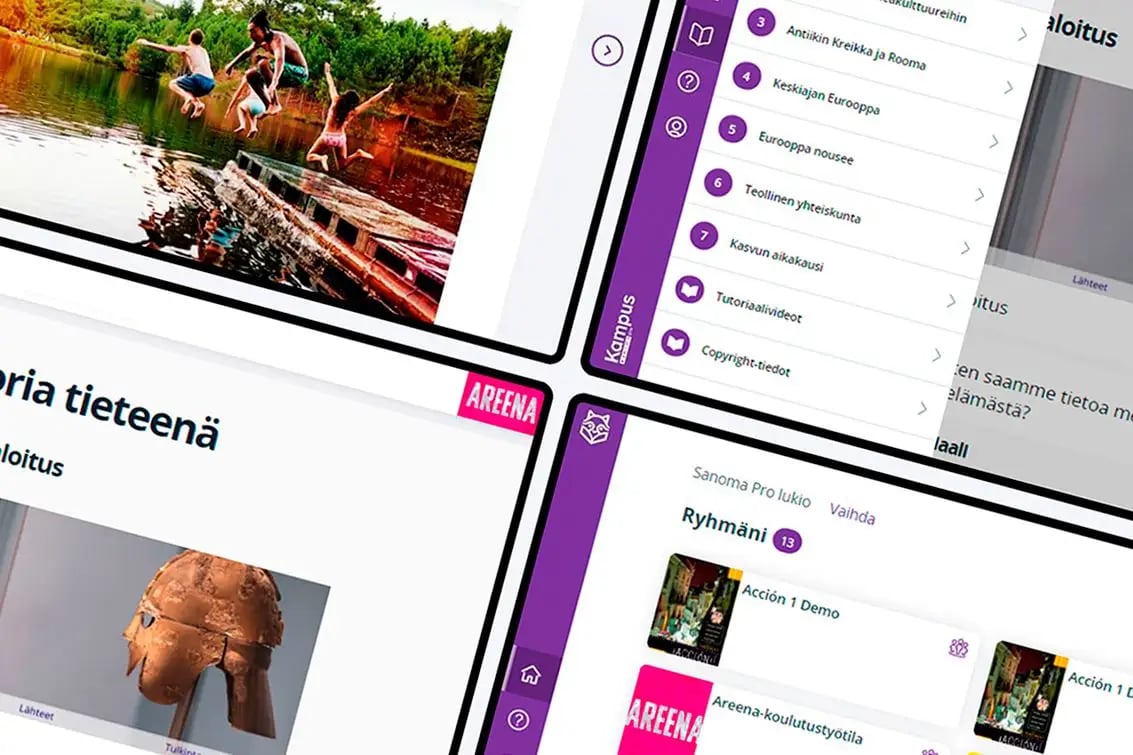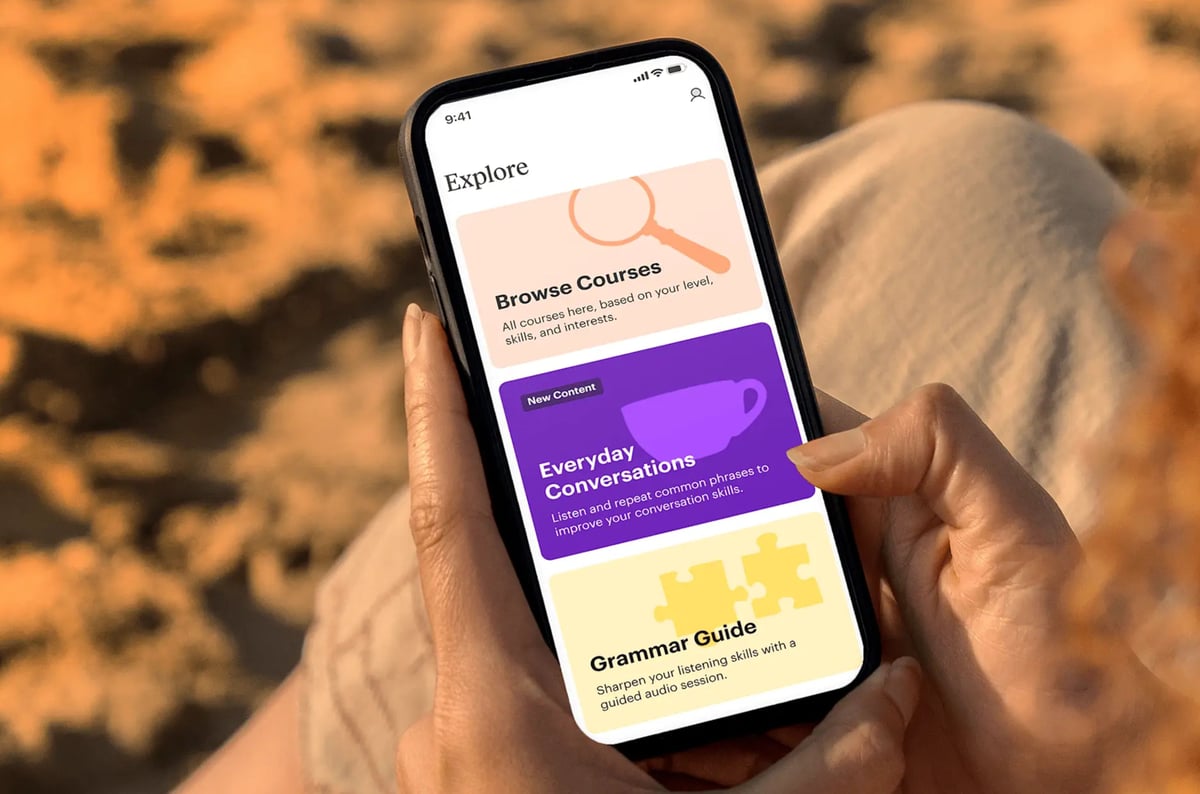
We prototyped and tested alternative ways to visualize and organize the learning material - over 30,000 pieces of information including text, audio, video, images, exercises, and games - then showed these early-stage prototypes to pupils and teachers. Feedback showed the continuous stream of bite-sized information was user-friendly for both groups of users: the pupils saw value in how the personalized feed remembers where you are in each topic and how it offers a simple way to submit homework, while teachers liked the ability to dynamically manage the feed with their own material (including external content such as YouTube videos) and the fact they can give personalized, context-based feedback.
By default, the pupil will see the content feed as it would be in a book, but the teacher can also include tests, tips, and reminders. The teacher has a dashboard where they can assess the class as a whole or create smaller groups and evaluate the progress of individual pupils.
We also made device independence a design principle, with the solution working alongside the use of books. In a digital environment, we can include audio and video alongside books and content from pupils and teachers and keep it all in context – as well as making it easier to carry information and homework to and from school.
Take your development process to the next level, and download our Design Sprint ebook!
Taking learning digital
For the last decade Sanoma Pro has focused heavily on digital learning, but the key question always remains: what will be the learning environment of the future?